
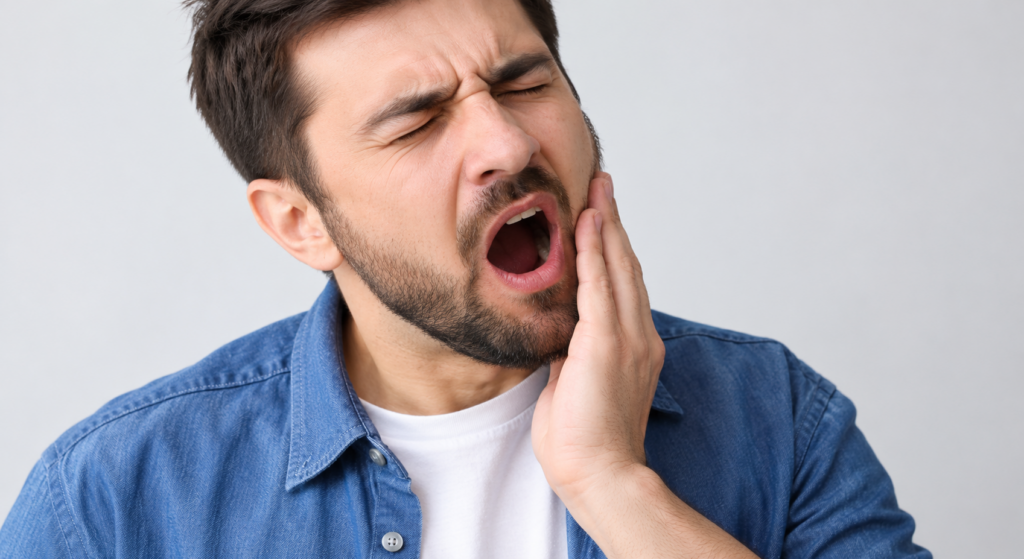
Jaw locks when I yawn can happen when the jaw joint or surrounding muscles do not move smoothly. A wide yawn puts extra movement through the temporomandibular joint (TMJ), which can trigger stiffness, pain, clicking, or temporary locking. In some cases, the problem may be linked to muscle tension, teeth grinding, joint problems, or another temporomandibular disorder (TMD).
At Kraner Family Dentistry, patients can receive personalized care for jaw pain, headaches, muscle tension, and other TMJ concerns. The practice offers TMJ and headache therapy to help improve jaw movement and comfort.
Key Takeaways
- Jaw locking during a yawn can have several causes.
- TMD can cause jaw stiffness, limited movement, and locking.
- Clenching and grinding may put extra strain on the jaw muscles.
- Avoid forcing a locked jaw open.
- Repeated or painful locking should be checked by a dentist.
Why Does My Jaw Lock When I Yawn?
If you ask why does my jaw lock when I yawn, the answer often involves the TMJ or muscles around it. The jaw must open wider during a yawn than during normal talking or eating. If the joint is irritated or the muscles are tight, this wider movement can cause discomfort or temporary locking.
The TMJ sits on each side of your face, just in front of your ears. It connects your lower jaw to your skull and helps you open, close, and move your jaw from side to side. Problems affecting this joint or the muscles around it may cause symptoms.
Common signs include:
- Jaw stiffness
- Pain near the ears or cheeks
- Clicking or popping
- Trouble opening the mouth
- A change in how the teeth meet
What Happens to Your Jaw During a Yawn?
Yawning causes your mouth to open widely and your jaw to move downward. This movement normally happens without pain or resistance. However, a joint that is already irritated may respond differently to a wide opening.
The muscles used for chewing also stretch during a yawn. If these muscles are tight from clenching, grinding, stress, or overuse, the movement may feel uncomfortable. A yawn can therefore make an existing jaw problem more noticeable. It does not always mean that yawning caused the problem.
Common Reasons Your Jaw May Lock
Several factors can contribute to jaw locking. These causes can overlap, so a dental evaluation may be needed to determine what is happening in your particular case.
Possible causes include:
- Temporomandibular disorders
- Tight or overworked jaw muscles
- Teeth grinding or clenching
- Previous jaw injury
- Joint inflammation
- Problems involving the TMJ disc
Can Clenching Cause Jaw Locking?
Yes. Frequent clenching can keep your jaw muscles working even when you are not eating or speaking. Over time, this may leave the muscles tired, tight, or sore. Some people clench during stressful situations without noticing. Others may grind their teeth while sleeping. These habits can place extra pressure on the jaw and may contribute to morning soreness, headaches, clicking, or difficulty moving the jaw.
If you notice that your jaw feels tight after waking up, pay attention to other signs. Tooth wear, sore facial muscles, or frequent headaches may suggest that your jaw is working harder than it should. Reducing clenching and giving the jaw time to rest may help. However, repeated symptoms should be assessed by a dental professional.
What Does It Mean When Your Jaw Locks?
When people ask what does it mean when your jaw locks, they may be describing several different experiences. Your jaw might briefly catch while opening. It may become difficult to close after a wide yawn. Or it may feel stuck in one position. The exact cause cannot be determined from the sensation alone. A dentist may ask when the locking happens, how long it lasts, and whether you have pain or clicking.
Signs That Deserve Attention
Occasional mild stiffness may settle with rest. However, repeated episodes deserve more attention, particularly when they affect eating or speaking.
Contact a dentist if you experience:
- Frequent locking episodes
- Pain while opening or closing
- Trouble eating
- Reduced ability to open your mouth
- Swelling around the jaw
- Painful clicking or popping
A professional assessment can help determine whether the problem involves the joint, muscles, teeth, or another condition.
What Causes a Jaw Locked When Yawning?
A jaw locked when yawning may be related to the wide opening required during a yawn. If the jaw joint is already sensitive, that movement can make the symptoms more noticeable.
The joint contains a small disc that helps the jaw move smoothly. Problems involving the joint or disc can affect normal movement. Muscle tension can also make opening the mouth uncomfortable.
Is Yawning Lockjaw a Serious Problem?
Yawning lockjaw can feel alarming, but not every episode means there is serious damage. Some jaw problems are temporary and improve with simple self-care. Still, repeated locking should not be ignored. A jaw that stays stuck, becomes very painful, or makes eating difficult needs professional attention. Do not try to force the mouth open. A sudden or aggressive movement could increase pain or strain the joint. If your jaw remains locked or symptoms are severe, seek prompt dental or medical care.
How Can I Unlock My Jaw Safely?
If you are wondering how can I unlock my jaw, the safest approach is to avoid force. The goal is to reduce strain rather than push the jaw into position.
For mild symptoms, you can try:
- Relaxing the jaw muscles
- Applying gentle warmth to the area
- Eating soft foods temporarily
- Avoiding gum and hard foods
- Avoiding very wide mouth movements
If your jaw remains stuck, do not keep trying to manipulate it yourself. A dentist can determine what is preventing normal movement.
How Is Jaw Locking Diagnosed?
A dental examination can help identify the reason your jaw is locking. Your dentist will usually begin by discussing your symptoms and looking at how your jaw moves.
The examination may include checking:
- How far you can open your mouth
- Whether movement causes pain
- Jaw clicking or popping
- Tenderness in the jaw muscles
- How your upper and lower teeth meet
How Is Jaw Locking Treated?
Treatment depends on the cause and severity of the problem. There is no single treatment that works for every person with jaw locking. Many mild jaw problems can improve with conservative care. Your dentist may recommend changes that reduce pressure on the joint and allow the muscles to relax.
Treatment may include:
- Jaw rest and activity changes
- Physical therapy
- Guidance for reducing clenching
- An oral appliance in suitable cases
- Medication when appropriate
- Personalized TMJ therapy
When Should You See a Dentist?
You do not need to panic over one brief episode of jaw stiffness. However, recurring symptoms are worth discussing with a dentist. Early evaluation can help identify the cause and guide appropriate care.
You should consider an appointment if your jaw:
- Locks more than once
- Hurts when you yawn
- Makes painful clicking sounds
- Feels stiff most mornings
- Limits how widely you can open your mouth
- Makes chewing uncomfortable
At Kraner Family Dentistry, TMJ and headache therapy is available for patients experiencing jaw pain, popping, headaches, and muscle tension. You can learn more about the practice’s TMJ and headache therapy and how it may help address ongoing jaw-related symptoms.
Can You Prevent Jaw Locking When Yawning?
You may not be able to prevent every episode, especially when an underlying joint problem is present. However, reducing unnecessary stress on your jaw may help. Try to avoid opening your mouth extremely wide. Support your jaw if you need to yawn, and avoid biting into very large foods. Limiting gum chewing may also reduce repeated jaw movement. If you clench your teeth, work on relaxing your jaw during the day. Keep your teeth slightly apart when you are not eating. Regular dental visits can also help identify signs of grinding, tooth wear, or other concerns.
When Lock Jaw Needs Prompt Care
A jaw that suddenly becomes difficult to move should be taken seriously when symptoms are severe or persistent. The need for care depends on how long the jaw stays locked and what other symptoms occur.
Seek prompt professional care if you have:
- Severe or worsening jaw pain
- Significant swelling
- A jaw that stays stuck
- Major difficulty eating or speaking
- A recent facial or jaw injury
A dental professional can help decide whether the problem is related to TMD or requires another type of medical evaluation.
Conclusion
If your jaw locks when I yawn, the problem may be connected to the TMJ, tight jaw muscles, clenching, grinding, or another condition affecting normal jaw movement. A single mild episode may settle with rest, but repeated locking should not be ignored.
Avoid forcing your jaw open if it becomes stuck. Instead, reduce strain and arrange a dental evaluation when symptoms continue. At Kraner Family Dentistry, personalized TMJ and headache therapy can help patients understand the cause of jaw discomfort and find appropriate ways to improve jaw function. Contact Kraner Family Dentistry today to schedule a TMJ evaluation and discuss your jaw locking symptoms with our dental team.
Frequently Asked Questions
Why does my jaw lock when I yawn?
A wide yawn can place extra movement through the TMJ. If the joint or jaw muscles are irritated, the jaw may become stiff or temporarily stuck.
Can stress make my jaw lock?
Stress can increase clenching and muscle tension. This may contribute to jaw soreness, stiffness, and other TMJ symptoms.
Should I force my locked jaw open?
No. Forcing the jaw open may increase strain or pain. Relax the muscles and seek professional help if the jaw remains stuck.
Can jaw locking be treated?
Yes. Treatment depends on the cause. Conservative care, lifestyle changes, physical therapy, oral appliances, or TMJ therapy may be considered.
When should I see a dentist for jaw locking?
See a dentist if locking happens often, causes pain, limits movement, or makes eating difficult. Persistent or severe symptoms deserve professional evaluation.