
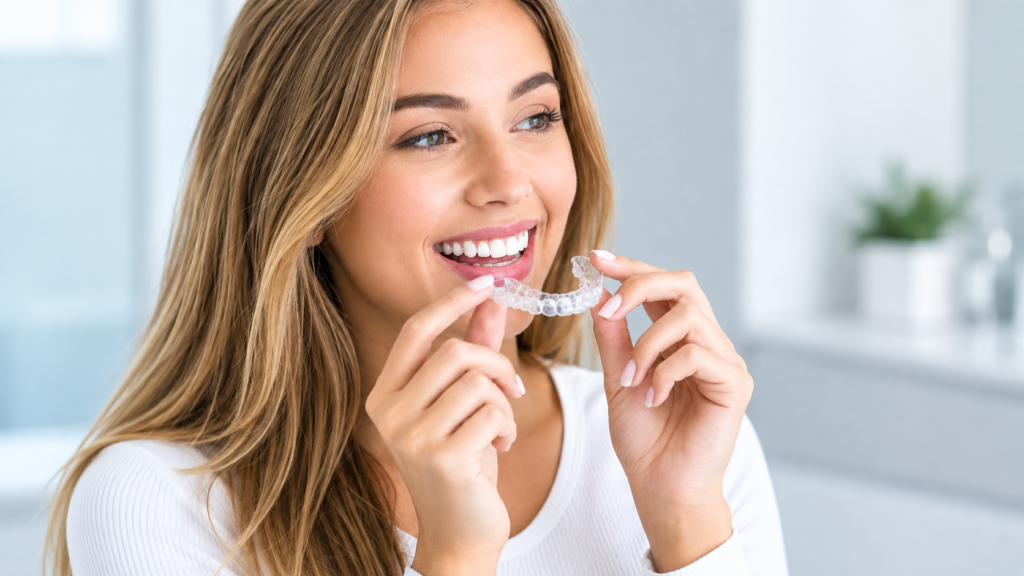
Will a sharp tooth wear down on its own? Sometimes, a tooth may become slightly smoother from normal chewing, but you should not rely on natural wear to fix a sharp edge. A sharp tooth can result from a chip, uneven enamel, grinding, or the natural shape of a tooth. In some cases, Invisalign may help if the sharp edge is linked to tooth alignment or bite problems.
At Kraner Family Dentistry, a dental exam can help identify why a tooth feels sharp and whether you need a simple cosmetic adjustment, restorative care, or invisalign treatment.
Key Takeaways
- A sharp tooth does not always wear down safely on its own.
- Chips, grinding, enamel wear, and natural tooth shape can cause sharp edges.
- A dentist can check whether the tooth needs tooth reshaping or another treatment.
- Invisalign may help when uneven tooth position contributes to the problem.
- A sharp or painful tooth should be checked instead of being filed at home.
Will a Sharp Tooth Wear Down Naturally?
A sharp tooth may become smoother over time because teeth experience normal pressure during chewing. However, this does not mean natural wear is a safe or reliable treatment. Too much wear can remove enamel and make a tooth more sensitive or vulnerable to damage.
If the sharp edge appeared suddenly, it may be caused by a small chip or fracture. If it has always been there, the tooth may simply have an uneven shape. A dentist can tell the difference during an exam.
What can cause a sharp tooth?
Several common issues can make a tooth feel sharp:
- A small chip or crack
- Natural tooth shape
- Uneven enamel
- Teeth grinding or clenching
- Worn or damaged dental work
- A tooth that sits at an unusual angle
The right treatment depends on the cause. A dentist should check the tooth before any part of it is removed.
Why Does My Tooth Feel Sharp?
A sharp tooth can feel different depending on what caused it. For example, a chipped tooth may have a rough or pointed edge that your tongue notices right away. A tooth that has changed because of grinding may also develop uneven edges. Sometimes, the problem is not the tooth itself. The tooth may look or feel sharp because it sits slightly out of line with the surrounding teeth. In this situation, improving alignment may be part of the treatment plan.
Signs you should have a sharp tooth checked
Consider scheduling a dental exam if you notice:
- Sudden changes in the tooth
- Pain when biting
- Sensitivity to hot or cold
- A rough or broken edge
- Cuts or irritation on your tongue or cheek
- A tooth that looks different from before
A sudden sharp edge is especially worth checking because a small fracture can sometimes become worse if it is left untreated.
Can a Dentist Smooth a Sharp Tooth?
Yes. In some cases, a dentist can gently reshape a small area of enamel to make the tooth feel smoother. This is often called tooth reshaping or enameloplasty. It may be appropriate when the tooth has a small uneven edge and there is enough healthy enamel to make a minor adjustment. However, reshaping is not right for every tooth. Removing too much enamel can weaken the tooth or cause sensitivity. Your dentist should first determine what caused the sharp edge and how much, if any, enamel can safely be adjusted.
What may happen during tooth reshaping?
The process is usually simple when only a small amount of enamel needs adjustment.
- Your dentist examines the tooth.
- The bite and tooth shape are checked.
- A small amount of enamel may be carefully adjusted.
- The surface is smoothed and polished.
- Your bite is checked again.
The goal is not to change the tooth more than necessary. Your dentist will consider both appearance and function before recommending this option.
Can Invisalign Fix a Sharp Tooth?
Invisalign does not physically file down or reshape a sharp tooth. Instead, clear aligners gradually move teeth into planned positions. Therefore, Invisalign may help when the tooth feels sharp because it is rotated, crowded, or sitting out of alignment. For example, a tooth that overlaps another tooth may create an uneven appearance. Moving the teeth into a better position can improve the overall shape of the smile. Invisalign is designed to treat several alignment concerns, including crooked and crowded teeth.
When might Invisalign be useful?
Invisalign may be considered when:
- A tooth is rotated or crowded.
- Uneven teeth affect the appearance of your smile.
- Your bite causes uneven contact between teeth.
- Several teeth need to be moved together.
- You want a discreet way to straighten your teeth.
Kraner Family Dentistry offers custom Invisalign care with digital scans and personalized treatment planning. Its website notes that treatment is designed to gradually move teeth while improving smile and bite alignment.
Sharp Tooth vs. Uneven Tooth: What Is the Difference?
A sharp tooth and an uneven tooth are not always the same thing. A sharp tooth usually refers to the feeling or shape of a pointed or rough edge. An uneven tooth may refer to differences in tooth height, position, angle, or alignment.
This difference matters because the treatment can be very different. A chipped tooth may need bonding or another restorative treatment, while a misaligned tooth may benefit from orthodontic care.
How treatment may differ
| Cause | Possible treatment |
|---|---|
| Small enamel edge | Tooth reshaping |
| Small chip | Dental bonding |
| Larger fracture | Restorative treatment |
| Crooked or rotated tooth | Invisalign or braces |
| Damaged tooth structure | Crown or other restoration |
| Grinding-related wear | Bite and grinding evaluation |
A dental examination is the best way to determine which option fits your tooth.
Can Tooth Reshaping Be Better Than Invisalign?
For a very small enamel irregularity, tooth reshaping may be more appropriate than Invisalign. It can address the physical edge of a tooth without moving the surrounding teeth.
However, reshaping cannot correct tooth position. If several teeth are crowded or rotated, removing enamel from one tooth may not solve the underlying problem. In that case, orthodontic treatment may provide a more complete solution. The choice depends on your tooth structure, bite, alignment, and smile goals. Your dentist can explain whether a small adjustment or a broader treatment plan makes more sense.
What If the Sharp Tooth Is Caused by a Chip?
A chipped tooth can create a sharp edge that is easy to feel with your tongue. Even a small chip should be evaluated, especially if it happened after an injury or while biting something hard. Treatment depends on how much tooth structure is missing. Minor chips may sometimes be repaired with bonding. More significant damage may need a crown or another restoration.
For patients who need extensive restorative care, treatments such as one day dental crowns may be discussed when appropriate. The best option depends on the amount of damage and the condition of the remaining tooth.
Can Invisalign Help With Other Uneven Teeth?
Yes, Invisalign can be useful for many types of tooth alignment concerns. Clear aligners apply controlled pressure to gradually move teeth. This can improve crowding, spacing, rotations, and other alignment issues when the case is suitable.
For example, some patients may be interested in Invisalign Close Gaps because spaces between teeth can affect the appearance of their smile. Invisalign treatment can address spacing as well as crowding, depending on the cause and severity of the case.
What Invisalign can potentially improve
- Crooked teeth
- Crowded teeth
- Certain spacing problems
- Some bite concerns
- Rotated teeth
- Uneven tooth positioning
Not every dental problem can be solved with aligners. A professional evaluation is important before starting treatment.
What Should You Do If a Tooth Is Getting Sharper?
If a tooth seems sharper than it used to be, avoid trying to file or sand it yourself. Removing enamel without knowing the cause can create permanent damage. Instead, have the tooth checked by a dentist.
Your dentist can look for chips, cracks, enamel wear, decay, grinding, and bite problems. They can also determine whether the tooth needs a minor adjustment, restorative treatment, or orthodontic care.
Before your appointment
You can make the visit easier by noting:
- When you first noticed the sharp edge
- Whether the tooth hurts
- Whether it reacts to hot or cold foods
- Whether you grind or clench your teeth
- Whether you recently injured the tooth
These details can help your dentist understand what may have changed.
How Long Does Invisalign Take for Uneven Teeth?
The length of Invisalign treatment depends on the type and severity of the alignment problem. Simple cases may require less time than more complex cases involving several teeth or bite concerns.
Kraner Family Dentistry states that its average Invisalign treatment takes about 6 to 8 months, although individual treatment times vary. The practice uses digital scans to create a personalized treatment plan. Because every smile is different, your dentist should assess your teeth before giving you a specific timeline.
When Should You See a Dentist for a Sharp Tooth?
A sharp tooth is not always an emergency, but certain symptoms should not be ignored. Pain, swelling, bleeding, sensitivity, or a sudden change in the tooth can point to a problem that needs attention.
A chipped or cracked tooth can sometimes worsen when you continue chewing on it. Getting it checked early may help prevent further damage.
If you are also noticing crooked or crowded teeth, mention this during your appointment. The sharp edge and tooth position may be connected.
Conclusion
So, will a sharp tooth wear down? It may become smoother over time, but natural wear is not a safe way to treat a sharp edge. A sharp tooth can be caused by a chip, enamel wear, grinding, or tooth misalignment. The right treatment may range from simple tooth reshaping to dental bonding, restorative care, or Invisalign.
If the sharp edge is connected to uneven teeth, Invisalign may help improve the position of the teeth rather than simply changing their shape. A professional evaluation can help you understand the cause and choose the safest option. Ready to find out what is causing your sharp or uneven tooth? Contact Kraner Family Dentistry to schedule a consultation and discuss your treatment options.
Frequently Asked Questions
Will a sharp tooth wear down on its own?
It may become smoother through normal chewing, but you should not wait for a sharp tooth to wear down. Excessive wear can remove healthy enamel. If the edge is new or uncomfortable, have it examined by a dentist.
Can I file a sharp tooth at home?
No. Filing a tooth yourself can remove too much enamel and may cause sensitivity or permanent damage. A dentist can safely determine whether reshaping is appropriate.
Can Invisalign fix a pointed tooth?
Invisalign does not reshape the tooth itself. However, it may help if the pointed appearance is related to tooth position, crowding, or rotation. A dentist can determine whether alignment treatment is suitable.
Is a sharp tooth always caused by a chip?
No. A sharp edge can come from a natural tooth shape, a small chip, enamel wear, grinding, or an uneven bite. A dental examination can help identify the cause.
Can Invisalign fix uneven teeth?
In many cases, yes. Invisalign can gradually move certain crooked, crowded, rotated, or spaced teeth. The exact treatment depends on your alignment and bite.